This blog is about writing, including background information, events, history, and characters. It also includes reviews of work by other writers and links to their pages.
Showing posts with label kentucky. Show all posts
Tuesday, December 29, 2015
Vying for an Award: 2015 Preditors & Editors™ Readers' Poll
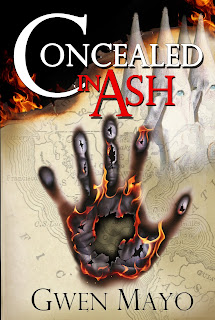
Concealed in Ash is competing for Best Mystery Novel in the 2015 Preditors & Editors™ Readers' Poll.
Please visit the poll to see the list of novels and authors. Right now, I'm tied for 10th place; I would be very grateful to have your vote.
http://critters.org/predpoll/novelmys.shtml
Thursday, November 07, 2013
Memories of Life on Four Mile Road
Today is difficult. I should be
working on the story my wife asked me to help plot, but my mind keeps
wandering back to a little four room house on Four Mile Road. It was
a rundown old farmhouse, without indoor plumbing, and heated by an ancient
cast iron stove. The house was a long way from everything. The sun set
between our house and the nearest town, a thriving metropolis of
nearly 3000 people, that we moved to some years later.
I didn't understand what poverty was,
and didn't see anything of the world beyond our holler. Day to day life didn't
change much. My brothers picked on me, my older
sister bossed me around, and the younger one was a fussy baby who displaced me as the baby. We
were Appalachian to the core, proud, independent, dirt poor, hard working, and barely getting by
from day to day.
My mother worked ten hour days in a
sewing factory. My father worked in a steel mill in Columbus, Ohio. He came home on the weekends bringing most of his paycheck and
the occasional treat. Being neither the youngest nor the oldest in the
family, my life was a constant attempt to avoid being
yelled at, beat up, or given more chores. It was a hard life. Everyone had to do their part to keep the family going. We grew
our own food, made most everything we had, and wasted nothing. I
didn't understand then how hard it was or how much harder it could get. Between age four and five, the bottom fell out of our isolated little world.
My father got hurt in the mill. I wish
I could remember him better before a thousand pounds of steel crushed his back, turned his hair white, and left him in pain for the rest of
his life. He eventually was able to return to the labor force, but
the years of recovery were a strain on all of us. After his injury, we
had to be very quiet around the house. Perhaps that quiet was the
beginning of my writing roots. Who knows? We had no books. The biggest comfort I had
growing up was my imagination. There I could escape to places where I
wasn't little, lonely, or frightened. Heroes populated my imagination
and magic worked wonders in my make-believe world.
If any family needed a little magic,
ours did.
With Mom at work and Dad laid up, we
kids pretty much raised ourselves. The major burden of that fell on
my oldest sister, Kay. Believe me, the rest of us were a huge burden. I
wouldn't wish my family on any teenager. My youngest sister was just
a baby, I was about four and a half, and the brother nearest my age was
barely six. Then there was Don. His twin died shortly after he was
born. I often wondered if he would have been different if Ronny had
survived too. Some of my earliest stories revolved around a brother I never met. Unlike Don, his dead twin liked me. He would never have tied my pigtails to the clothes line and left me hanging there until Mom got home.
My brother Don was the kid who is always a
little slower, a little less able. He didn't learn to walk until he was nearly four. My brother Don had about nine tenths of the
necessary skills to manage his own life, let alone manage to turn out
well under the conditions we grew up in. That missing tenth, that
small part that gives us common sense, just wasn't there. That would have held him back in any course his life
might have taken. As poor kid in Eastern Kentucky, he never stood a chance at having a decent life. His brain worked just well enough to get him into
trouble and his temper worked too well. Over time, Don and trouble became synonyms.
At sixteen Don got tired of walking
home, so he stole a bicycle from a classmate. For
that lack of impulse control, he was sent to reform school until he
turned eighteen. Before his nineteenth birthday, he went to prison for
the first time. Perhaps went to prison for a lifetime is a more
accurate account. He turned a three year prison sentence into a career as a
prisoner. There were brief respites when his keepers granted parole, but those could be measured in months.
On television we see criminals commit
complex, well planned crimes. Maybe he was aiming at being one of those
criminal masterminds, but if that was the case, his aim fell really short.
Don committed crimes like driving the Baptist minister's
car up the courthouse steps, and breaking into a hardware store and
sleeping in a hammock overnight. My personal favorite crime was his
first escape from jail. Yes, there were other escapes. Don's biggest
talent was was getting out of or into a locked room. However, that
first jail break was the most memorable.
His great jail break was particularly
noteworthy because the jailer didn't know it had happened until his
next arrest.
In the jailer's defense, the breakout and arrest were
only about an hour apart.
That day, my wiry brother decided that if he
stripped and soaped himself down he would be able to slide between the bars. At
this point, I should point out that the cells were on the second
floor of the jail and the jailer lived on the first floor. This is
important because Don forgot to throw his clothes down before
climbing out. With no way to retrieve his drawers without turning
himself in, he tried to run home before anyone saw him.
Even in a
small town in Eastern Kentucky it is difficult to run half a mile
buck naked through downtown without someone noticing. His subsequent
arrest was for “streaking.” The “escape” charge was added
when the officer brought him in and the jailer realized he was
supposed to already be there.
If you are wondering why I am talking
about this, it is because I am thinking about Don today. He has found
a new prison to occupy. One he created all by himself through years of smoking, a habit he picked up in reform school and mastered through years of prison. They actually let him come home when his lungs were so bad he had to be on oxygen all the time.
He is hooked to a ventilator now, and sedated so
he won't remove the tube. I am not sure how I feel about what's happening to him. I
know he doesn't want to be on this ventilator. He has stated frequently that he doesn't want to be kept alive. But the hospital
doesn't have a Do Not Resuscitate order on file for him. Whether he
neglected to give it to them or they lost it is anybody's guess. He
is in no condition to sign a new one. Nothing he or I or anyone else
can do can change his situation.
It seems to me that life has been so
utterly unfair to him in every possible way that this is a fitting end. From his birth as a premature twin before neonatal care could have helped him develop, to his impoverished childhood and the lack of special education programs in the 1950's, to the years of prison, my brother never stood a chance of having a decent life. Perhaps, it is somehow fitting
that the end of his life is as utterly messed up as the rest of it. I would like to think that when his struggle is over, he will be reunited with that missing twin - the twin who was kind and loving and would never stick his little sister in a bucket and drop her down the well.
Tuesday, July 12, 2011
Kentucky's Nineteenth Century Secret Societies
I have decided to start a new feature in my blog discussing Kentucky's Secret Societies. Anyone who has followed me knows a little about the Knights of the Golden Circle, who figure prominently in CIRCLE OF DISHONOR. The KGC was just one of the many organizations active at that time.The Nineteenth Century was home to a plethora of Secret and Semi-secret Societies. These societies rose in membership and power in Kentucky as the political structure of the state divided and rushed headlong into Civil War.
No state was more divided, more pivotal, or more ill equipped to deal with war than Kentucky. That fact is perhaps best demonstrated by the formation of Kentucky’s shadow legislature, which formed for the express purpose of keeping a Confederate government in Kentucky during the Civil War.
Secret Societies were not all related to the hostilities that threatened to dissolve the United States into two nations. The Nineteenth Century was a time of rapid growth in these types of organizations in Europe and the Americas. Many scholars attribute the spread to the repressive nature of the Victorian Age combined with the rapid social changes forced by industrialization. The world was changing. Immigration, secessionism, industrialization, and social reform placed pressure on every community. Kentucky was ill prepared for change as it shifted from its former place as a western frontier state and struggled with its new identity as a hinge pin in the conflict between slave and free states.
Whatever the problem facing Kentuckians, for good or evil, a society formed to fill the gap. Most were benevolent organizations taking on the monumental task of improving conditions in their communities. Some were church or community outreach societies where members banded together to perform charitable work, often anonymously, within their community. The level of secrecy each organization kept varied by the wishes of organizers or the needs of members.
Kentucky harbored societies with far ranging goals. Men and women organized to explore the occult, engage in acts of evil, and gain mystic power. There were societies planning overthrow the government, establish a new world order, and defend white supremacy. Kentuckians also banned together to fight slavery, protect homes and families, maintain peace, and above all survive the long, bloody war that touched every life in the nation. The history of these societies play a part in the history of every county. Together they tell us a great deal about where we came from and who we are as Kentuckians.
Secret societies divided along the lines of color, creed, political affiliation, opinion on social ills, and ethnic origin. To understand why they had such an enormous growth in the 1800's, we must look at them through these lenses. We must consider their successes and failures, the impact on the time, and why some of them no longer exist. If the feature is successful, we may also take a look at those that remain and the changes that have taken place within their ranks to keep them active today. I invite you to step back in time with me as I explore this aspect of Kentucky's past.
Tuesday, April 26, 2011
President Rutherford B. Hayes Announces Plans for a Midwestern Tour, April 26, 1879
Before George W. Bush and Al Gore battled over the presidency, Rutherford B. Hayes was thought to have "stolen" the office of president. The election of 1876 was plagued by corruption, back room deals, and bitterly contested election results. When it was over, Samuel Tilden of New York had 51% of the vote and 184 electoral votes. Hayes had 185 electoral votes but only 47% of the popular vote. Elections were contested and electoral votes up for grabs in Florida (have we heard this before, Louisiana, and South Carolina. One of the electoral votes of Oregon was declared illegal and not counted. Hayes, the Republican candidate, was awarded the contested states giving him the victory and forever marking his presidency as the "stolen election."
When the spring of 1879 rolled around, the Republicans were starting to panic about the upcoming 1880 election. The suddenly remembered that Samuel Tilden had carried the entire Midwest and all of the South except those three contested states. It also occurred to them that the deal that gave President Hayes Florida, Lousiana, and South Carolina wasn't very popular in those states. They were pretty certain that they were going to lose the whole south. To win in 1880 they needed the Midwest and West to vote decisively republican. The President was persuaded to take his message on the road.
Kentucky wasn't very receptive to the idea of hosting the president. Washington politics were not kind to Kentucky. In fact there was a great deal of fear that any stop in the state of Kentucky would be dangerous. Politically, touring the Midwest and skipping Kentucky was also filled with danger. The Republicans decided to limit the tour to one visit to hostile Kentucky. Louisville was the President's preferred stop, but the city was too connected to Northern businessmen to be considered. Frankfort, the State Capitol, had just assassinated Judge Elliott, and therefore ruled out as a possible stop. After much consideration, Lexington was deemed safe enough for the President to visit.
In April the tour was announced:
Presidential Midwestern Tour, Greenfield, Ohio, September 9, 1879
Presidential Midwestern Tour, Cincinnati Industrial Exposition, Cincinnati, Ohio, September 10, 1879
Presidential Midwestern Tour, Cincinnati, Ohio, September 11, 1879
Presidential Midwestern Tour, Cincinnati Chamber of Commerce, Cincinnati, Ohio, September 11, 1879
Presidential Midwestern Tour, Lexington, Kentucky, September 12, 1879
Presidential Midwestern Tour, Youngstown, Ohio, September 17, 1879
Reunion of the 23rd Ohio Volunteer Infantry, Youngstown, Ohio,
September 17, 1879
Presidential Midwestern Tour, Merchants and Manufacturers Exchange, Detroit, Michigan, September 18, 1879
Presidential Midwestern Tour, Fremont, Ohio, September 20, 1879
Presidential Midwestern Tour, Aurora, Illinois, September 23, 1879
Presidential Midwestern Tour, Mendota, Illinois, September 23, 1879
Presidential Midwestern Tour, Galesburg, Illinois, September 23, 1879
Presidential Midwestern Tour, Fort Scott, Kansas, September 24, 1879
Presidential Midwestern Tour, Parsons, Kansas, September 24, 1879
Presidential Midwestern Tour, Appleton, Kansas, September 25, 1879
Presidential Midwestern Tour, Neosho Falls, Kansas, September 25, 1879
Presidential Midwestern Tour, Dodge City, Kansas. September 26, 1879
Presidential Midwestern Tour, Tootle's Opera House, St. Joseph, Missouri, September 29, 1879
Presidential Midwestern Tour, Springfield, Illinois, September 30, 1879
Presidential Midwestern Tour, Cleveland, Ohio, October, 1879
Presidential Midwestern Tour, Indianapolis, Indiana, October 2, 1879
Presidential Midwestern Tour, Sandusky, Ohio, October 2/3, 1879
Presidential Midwestern Tour, Clyde, Ohio, October 9, 1879
Presidential Midwestern Tour, Delaware, Ohio, October 18, 1879
The President never left his train. He delivered a brief speech from the platform of his private rail car, gaining some approval from his audience when he shared memories of voting in his first presidential election for Lexington's Henry Clay. For the most part, Lexington's citizens were polite but not enthusiastic about the speech. Hayes spoke for less than five minutes before introducing one of the generals he was traveling with, there is dispute over whether it was General Sherman or General Sheridan who spoke. The public event ended. The train remained at the station for about an hour to fulfill the party's obligation of inviting some of Kentucky's top leaders to a private reception with the President).
Hayes didn't change many opinions in Kentucky. He didn't expect to accomplish much, and Kentucky wasn't expecting much from him. Not a lot has change since then. At least we haven't shot a judge lately.
Tuesday, February 22, 2011
Making Kentucky Southern
Before the Civil War, Kentucky was more Western than Southern. When the North and South collided over slavery, the heart was ripped from Kentucky. The state quickly declared neutrality, but neutrality in principle was much easier than neutrality in practice. By autumn, it was clear that the state would have to choose one side or the other. Uncertain of the vote, Union troops surrounded the capitol and refused to allow the legislature to meet until pro-Union forces had strong-armed enough legislators to win the vote. In one case, Pinkerton agents kidnapped a pro-Confederacy legislator and placed him between Union and Confederate lines in the hopes he would become a casualty of the war.
Voting to remain loyal didn’t end Kentucky’s deep divide. Union sympathizers organized Home Guards, Confederate sympathizers organized into State Guard militia units. Both groups poured money and supplies into their causes. Among the casualties of the conflict was the racing industry. Problems for racing interest arose when horse hungry armies began confiscating Kentucky’s beloved thoroughbreds. General Morgan, a native of Kentucky’s Bluegrass Region, was particularly good at finding and stealing the state’s prized racehorses. Racing stables had little redress for their losses.
The government was impotent at preventing the flow of horses and goods to the armies. The state house in Frankfort was surrounded by federal troops, and the legislature was prevented from meeting until President Lincoln was sure the state would not vote for secession. Meanwhile, President Davis and Confederate supporters set up a shadow government in Bowling Green and sent delegates to the southern legislature. Eventually the Union Army moved in to take charge, but dividing lines had already been drawn in each family. Through the long bloody war, Kentucky citizens bled through uniforms of both blue and gray.
Lee’s surrender may have marked the end of the war, but Kentucky’s troubles were destined to erupt in an array of new ways. The state government was in tatters, and readjustment (a word invented for Kentucky to justify martial law in a state that had remained in the Union) devastated the farming industry. Harsh fines and taxes imposed by the federal troops escalated to the point of bankruptcy for many Kentuckians. Washington compounded the problem by treating the state as a conquered territory.
The excesses of the federal government following the Civil War helped transform Kentucky into a solid Southern state. Within ten years of the war, travelers would be hard pressed to find any Kentuckian who admitted fighting for the North.
Thursday, January 06, 2011
Thursday's Thugs: Knights of the Golden Circle
A group of five men met in Lexington, Kentucky on Independence Day of 1854 and took the first steps toward organizing the Knights of the Golden Circle. They placed a compass on a map of the Americas, with its center point being Havana, Cuba and drew a circle that encompassed the entire Southern United States, portions of Mexico, Central and South America. These men claimed they would unite in a Golden Circle and take over the production of cotton, coffee, sugar, chocolate, rice and tobacco. Through controlling these New World crops they believed they could control the world.
Dr. George Washington Lafayette Bickley was the moving force behind organizing the Knights of the Golden Circle. He and his friends supported the reopening and expanding of the slave trade, buying up huge tracts of land in the countries he wished to control, and most of all, building a Southern-controlled empire around the plantation model.
A lot of Southerners would take exception to the Knights of the Golden Circle being called thugs, but the bad guys in Circle of Dishonor deserve the name. The KGC was behind a rash of payroll robberies in Kentucky and Ohio. These robberies probably led to the rumors of a secret stash of Confederate gold that the KGC was charged with protecting. They were also behind the reported 5th column of the Confederacy. John Hunt Morgan believed that the KGC would rise up and take arms when he led his command into Kentucky and Indiana.
Counting on thieves, profiteers, and assassins to form an army was a mistake that cost Morgan dearly. The KGC plot to burn New York City was closer to their type of rebellion. The one Castle that did take action, by stealing a train and attempting to invade Mexico, gave up without firing a shot before their train got out of Kansas.
The KGC appeared on the scene with a plot to assassinate Lincoln before his inaugural train could reach Washington. Nobody knows if the story is accurate or if it was the invention of Alan Pinkerton to establish himself as the newly elected president's bodyguard. Certainly there were members of the KGC in Maryland, but how effective they were at that stage of their growth is impossible to know.
By the end of the Civil War, the KGC had established Castles (local chapters of the Knights) in every Southern state. At their peak, there were 20 Castles in Texas alone. Kentucky is estimated to have produced 400,000 members of the KGC. The population of the state and the pro-Union factions active in Kentucky make me believe that the actual number of members was far lower.
One of the problems I have run into when researching the KGC is the "Golden Ticket." A group of New York con men managed to travel through most of Kentucky, Ohio, Indiana and Illinois selling gold/yellow tickets that could be presented to General Morgan and his men to would keep them from stealing horses and other livestock from Confederate sympathizers. But as one parses through fact and fiction, the pieces clearly form a picture of men intent upon ruling the world at any cost.
Thursday, July 15, 2010
Revisiting the Regulators
Writing about post Civil War Kentucky takes me down a lot of different roads. Revisiting the Regulator Uprising of 1879 took me on a road back home to Eastern Kentucky. There were Regulator problems in most Kentucky counties throughout the decades of discord,the decades from the end of the Civil War through the early 1900's. In 1877, a large portion of Martinsburg (Sandy Hook) was burned by Regulators. The uprising had its beginning in Elliott County, but quickly spread to Lewis, Carter, Boyd, and Rowen.
On the night of October 20, 1879, about 200 armed men took two prisoners (John W. Kendall and William "Bill Muck" McMillan) from the Martinsburg jail and hanged them from a tree in the court house square. The hangings started a virtual vigilante takeover of local government. Hundreds of men joined the Regulators and thousands of families lived in fear of their version of law enforcement. During their vigilante governing of Eastern Kentucky, these masked men acted as the legal and moral police of the region. They took it upon themselves to discipline not only lawbreakers but drunkards, abusers, derelicts, loose women, adulterers, etc. Regulators would swoop in on horseback, threatening, beating, and often driving offenders from the community.
Subscribe to:
Posts (Atom)


