Showing posts with label mysteries. Show all posts

Tuesday, June 01, 2021

Review: Catriona McPherson's Scot on the Rocks


Catriona McPherson’s latest Last Ditch mystery is hard to put down. If you haven't read one of her books about a Scottish ex-pat, Lexy Campbell, trying to make a go of life in California, this one is a great place to start. The prose sparkle and her humor shines through on every page. Don't let the laughter lull you into thinking this is a fluff read. There is depth to the quirky characters at the Last Ditch Motel and enough twists and turns in the plot to please the most avid mystery fan. 

In Scot on the Rocks, one of Cuento's beloved statues, Mama Cuento is stolen. All that's left is a bronze toe and a sinister note.  Lexy and her crew decide to "help" the police find the missing statue. They are pulled into finding Bran, Lexy's ex-husband's missing wife, Brandee. When Bran shows Lexy and crew a similar kidnapping note he received with an acrylic nail enclosed, it’s anybody’s guess as to what is going on, what’s connected, and what’s not. 

This is the third book of the series. Lexy is a relationship counselor in Cuento, California. Todd, the anesthetist who lives at the motel with his pediatrician husband Roger, and germophobic Kathi, who is married to the motel’s live-in manager Noleen, have inserted themselves into Lexy’s counseling business, creating Trinity Services. 

In fact, her pals have inserted themselves into any business that comes Lexy’s way. Her friends have twin passions, finding Lexy the perfect man, and solving mysteries. She wishes they would give up on the perfect manhunt, but that is another story. 

The Last Ditch Motel is a large diverse family. It doesn't take long for the entire family to get involved in this wild and wooly chase for answers, although the standing members of Trinity Services, Lexy and Todd and Kathi take the most dangerous risks and find themselves on a road trip to Patriarchyville. There are lots of surprises in this tale of who or what went where and why. 


Catriona McPherson knows how to tell a great story, and in this series, readers also can depend on McPherson to make them laugh. She is also a master of creating a magnificent cast of characters. Readers will be entertained and surprised at every turn of the road.

Thursday, May 27, 2021

Mary Roberts Rinehart America's Queen of Mystery

Mary Roberts Rinehart in Shadowlands

Mary Roberts Rinehart (August 12, 1876 – September 22, 1958) was an American writer best known for her mysteries. She published her first mystery novel, The Circular Staircase, in 1908, which introduced the "had I but known" narrative style. Rinehart is also considered the source of "the butler did it" plot device in her novel The Door (1930), although the exact phrase does not appear in her work. 

Her books were wildly popular.  All through the 1920s, Mary Roberts Rinehart's books made the bestseller list. The prolific writer is often compared to Agatha Christie in terms of her career. While it is true that both women wrote books, short stories, an autobiography, essays, and long-running plays (Agatha Christie's The Mouse Trap and Mary Roberts Rinehart's The Bat), I don't really like to do that sort of comparison between writers who were so very different in their approach to the art of storytelling. 

Before going further with this post, I must make the following confession: I am not an unbiased judge of why Christie's books have remained in print and Mary Roberts Rinehart's have not. I am a huge Agatha Christie fangirl. I was once barred from an Agatha Christie trivia contest because I had answered too many of the questions. 

I first discovered Rinehart's books when I ran across The Circular Staircase in an old house I was helping my brother demolish. The book was a bit musty, but you take your books where you can find them in a town with no bookstores or libraries. I took it home and read it that night. I enjoyed the story, but didn't run across another of her books for many years. One book does not a fandom make. I passed the book on to a fellow bookworm in town and didn't think about it again until years later, I discovered another among a stack of other Rinehart first editions. 

It was then that I began to read her work and learn more about this remarkable woman. Rinehart knew what it was like to grow up poor. She worked hard to put herself through nursing school. During WWI, she was a war correspondent for the Saturday Evening Post. She and her husband lost everything in the stock market crash, but her writing success enabled them to recover and prosper. 

Hardship was not entirely behind her, though. In 1946 she was diagnosed with breast cancer, which led to a radical mastectomy. She eventually went public with her story, at a time when such matters were not openly discussed. The interview "I Had Cancer" was published in a 1947 issue of the Ladies' Home Journal; in it, Rinehart encouraged women to have breast examinations. 

Her work reflects a life lived to the fullest. I can understand why the "had I but known" style of writing fell out of fashion, but much of Christie's work is also stilted. If there is a real comparison to be made as to why Agatha Christie still remains popular and Rinehart is less so, it is the detectives they wrote, or rather in Rinehart's case, the lack of a recurring detective in her books. Neither of her recurring characters Hilda Adams or Tish Carberry appear often enough in her books to be considered series characters. 

Tuesday, December 29, 2015

Vying for an Award: 2015 Preditors & Editors™ Readers' Poll

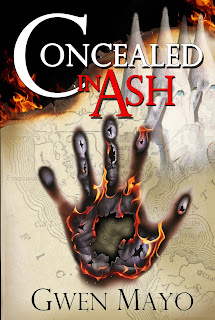
http://www.amazon.com/Concealed-Ash-Nessa-Donnelly-Mysteries-ebook/dp/B015M8IJIE/

Concealed in Ash is competing for Best Mystery Novel in the 2015 Preditors & Editors™ Readers' Poll.

Please visit the poll to see the list of novels and authors. Right now, I'm tied for 10th place; I would be very grateful to have your vote.

http://critters.org/predpoll/novelmys.shtml

Saturday, August 03, 2013

Interview with Gloria Alden


Gloria Alden and Her Gnome

Today I am chatting with Gloria Alden, one of the authors in Mystery and Horror, LLC's new anthology Strangely Funny. Gloria has a number of published short stories, including “Cheating on Your Wife Can Get You Killed,” winner of the 2011 Love is Murder contest and published in Crimespree Magazine; “Mincemeat is for Murder” appearing in Bethlehem Writers Roundtable, “The Professor’s Books” in the FISH TALES Anthology; and “The Lure of the Rainbow” in FISH NETS, the newest Guppy Anthology. She is the author of the Catherine Jewell mystery novels and a middle-grade book, THE SHERLOCK HOLMES DETECTIVE CLUB. She lives on a small farm in Southington, Ohio with two ponies, some cats, five hens and her collie, Maggie. She blogs on Thursdays with Writers Who Kill and once a month with the Fish Tales Anthology Blog.

So Gloria, tell us a little more about yourself.

I’m a retired elementary school teacher with a Master’s degree in English. I’ve been writing mysteries for some time and have had five short stories published now and this past year I decided to indie publish the first in my Catherine Jewell mystery series – TheBlue Rose and the 2nd one Daylilies for Emily’s Garden came out in May. I’m in the final edit of my third. I also have a middle-grade mystery out – TheSherlock Holmes Detective Club based on a writing activity I did with my third grade having them follow the adventures of an elderly woman, who was traveling around the U.S. on the track of two jewel thieves. Because the letters came postmarked and unopened from places she was having her sometimes dangerous adventures – thanks to friends and relatives around the country, they believed in her and their letters to her are funny and precious. I live on a small farm with two ponies, a few hens, two barn cats, two house cats, and my companion, Maggie, a tri-color full sized collie. I’m also an exuberant gardener who doesn’t know when to stop making new gardens which is why my books have a gardening theme. I took up backpacking when I was 60 and only stopped when my younger sister couldn’t do it any longer.

What event in your life helped you know you wanted to become a writer?

A year after my oldest son died of cancer at eighteen; I entered college for the first time to become a teacher. The first essay I wrote for an English class was “Saying Good-bye” about his death. My professor liked it so much that she suggested I submit it to the campus’s literary magazine. I did and it was accepted and from then on I wrote a lot of poetry and submitted it and also had a short story win an award for freshman writing. I also took an overload of every literature and writing class offered in addition to my elementary education courses and did well in all of them. I even enjoyed writing research papers. I think going to college as an older student is what led me to become a writer.

What made you decide on writing mysteries?

That’s easy. Although I’m an eclectic reader, mysteries have always been my favorite reads starting with Nancy Drew. I love trying to solve the problem of who done it before the end as well as getting totally immersed in a place and characters that make me feel like I am there.

You write adult and young adult mysteries. What do you see as the difference in writing for a younger audience?

Actually, I don’t write young adult, but middle-grade. I love middle-grade kids and after teaching that age for 20 years plus having Cub Scouts and then a Girl Scout troop for 10 years, I relate to this age, and in some ways my sense of humor works well for them. But writing for a mature audience is more full-filling for me. I can include topics including murder as well as others that would not be appropriate for youngsters.

Are you a plotter or a pantser?

I’m more of a pantser; however I do create characters, especially my murderers by writing a biography of them showing what leads them to murder. In doing so, I actually have sympathy for my murderer and wish he/she didn’t take that final irreversible step. Once I start the book, I have some notes of things I want included, I have a plot in mind, but from then on the characters and story kind of take off on their own.

What makes you so sexy?

After I got up from the floor from laughing so hard, I thought about it. Maybe it’s because I wear very little makeup? Or maybe it’s because I’m more comfortable in jeans or shorts? Or could it be my white hair worn in a simple style that I never fuss with? And then I decided it was the barn boots I wear when it’s wet outside for my walks in the woods or cleaning the pony stalls. If I asked my son and daughter-in-law whose house I pass each morning, they might say it’s the raggedy and well-worn, but warm old snowmobile coat I wear in the winter with a red knit hat, although they’ve been nagging me for years to buy a new one even if I have to go to Good Will.

Okay, so you’re an author. What do you enjoy reading?

Mysteries, of course, mostly traditional, but I’ll read others, too. I’ve always enjoyed Jane Langton for her intricate plots, characters and great sense of humor. I like Elizabeth George and Louise Penny, and so many other authors I can’t list them all. I also belong to two book clubs and almost always I enjoy the books that are chosen that I might never have read if it wasn’t for them. I also read TIME magazine and the daily newspaper. I have a library/dining room/office with several walls of book plus book cases in almost every room of my house and where there isn’t a book case, books are still somewhere in the room.

What books have most influenced your life?

I’ve been reading since I was six – a lot of years - so that’s impossible to say. I can’t imagine a life without reading books. If I had to pick one book that I’ve read three times and would be on almost everyone’s list as one of the best, it’s To Kill a Mockingbird.

Do you see writing as a career?

It’s one of the things I really enjoy doing and plan on writing for as long as I can. I have so many stories still inside me. I’m editing my third book in the series and have my plot for the fourth, and actually some notes for future books. My series is on a monthly basis; 1st in June, 2nd in July and on. I also write a blog for every Thursday on Writers Who Kill. But do I consider it a career? Not really. I won’t get rich at it, but I have a pension and it’s not so much about the money as wanting to be read. I’m not going to put in hours and hours every day on writing my mysteries. I have a rather large family, friends, and other interests like gardening, volunteering, and reading to name a few. Plus my critters take time, and I can only stand just so much clutter surrounding me. 
 
Thanks for being my guest today. 

Strangely Funny is now available in print, Kindle, and other e-book formats.

Tuesday, November 13, 2012

Guest Blog: Donna Fletcher Crow


A Story to Tell

Thank you inviting me to be a guest today on your blog, Gwen and Sarah. This visit is part of the tour many of us are doing for the brand new e-book 25 Years in the Rearview Mirror, 52 Authors Look Back. If you enjoy magazine columns and Chicken Soup for the Soul books, then you're sure to enjoy our collection of essays, designed to warm your heart, raise your spirits and compel you to examine your own life. Read about school days, quirky jobs, romance, raising a family, hard times, the writing journey, and find out what makes your favorite characters tick. Get a full listing of authors, essay titles and retailers here: http://ning.it/OknwVR

Follow the 25 Years in the Rearview Mirror Blog and Radio Tour schedule here: http://ning.it/NZpHrP

Since Gwen and I share a love for historical fiction I want to share some of the historical background in A Darkly Hidden Truth, book 2 in my Monastery Murders series.

A particularly perceptive reader once asked me, “What drives you?”

Ah, good question! Writing is hard work. One must be self-motivated and determined to get up every morning and go to the computer (or typewriter was it was in those days). The answer obviously wasn't money. I did make a modest income, but less than I could have been making teaching school as I did before becoming a full-time writer.

“The story,” I replied. “I want to tell my characters’ stories.” This is especially true when working with historical characters, as I almost always do in my books. Whether the historical characters are my hero and heroine or background characters, I’m driven— I’ll use the word— to tell their story.

We can learn so much from people from the past. They have fought, suffered, endured to pass their knowledge and wisdom on to us. We need to know and appreciate what they have done.

That was many years ago when I was first asked the question, but my answer holds just as true in my 41st novel which I am now working on, as it did in that very first series my reader asked about.

A Darkly Hidden Truth has two remarkable women in the background whose stories I have long wanted to tell. Julian of Norwich and Margery Kempe were both mystical medieval women writers and their life spans crossed— they actually met in an event Margery records— but they lived far different lives, had far different personalities and wrote in vastly different styles.

Julian of Norwich (1342-1416) became the first woman to write a book in English when she wrote an account of the 16 mystical “showings” she experienced of the love of God. After her amazing showings Julian lived a life of quiet contemplation as an anchoress in a single room attached to a church in Norwich, going nowhere and seeing only her servant and those who came to her worldside window for counseling— Margery being one of those seekers. Margery travelled the world, going on pilgrimages as far afield as the Holy Land and Santiago de Compostelo.

Julian wrote her Revelations of Divine Love, speaking only of her visions and of the love of God for his creatures. She divulges no details of her personal life— we don’t even know her name. We call her Julian because that was the dedication of her church. We know how she would have lived because she lived by The Ancrene Rule which set out rules for anchoresses. That left me free as a novelist to imagine a life for her prior to her visions which she experienced at the age of 30. Had she been married? Had she taken vows as a nun? No one knows, but I had great fun entering into “what might have been.”

Margery Kempe (1373-1440) “wrote” the first autobiography in English, although she was illiterate, by dictating it. Unlike Julian, Margery tells all. Even of the joyous sex life she shared with her husband. (They had 14 children.) She tells of her period of madness after the birth of her first child. She tells of her spiritual struggles with earthly vanity. She tells of her shrieking and bouts of uncontrollable weeping that made one group of pilgrims abandon her so that she had to cross the Alps in a blizzard with only an aged priest as companion.

And yet both women tell of the love of God, of the goodness of life. They speak of joy and beauty in the midst of unbelievable suffering. They tell stories I could never invent in my wildest fantasy. And it’s all true. And it’s all ours because two women centuries ago put their unique experiences on paper. And now I have the privilege of telling their stories alongside the adventures of my fictional Felicity and Antony in A Darkly Hidden Truth:

Antony needs Felicity’s help to find a valuable stolen icon. But Felicity is determined to become a nun. Then her impossible mother turns up unannounced. And a dear friend turns up murdered. Felicity and Antony are off on another adventure that takes them from remote Yorkshire to London to the soggy marshes of the Norfolk Broads. Felicity learns the wisdom of holy women from today and ages past and Antony explores the arcane rites of the Knights Hospitaller. But what good will any of that do them if Felicity can’t save Antony’s life?

Donna Fletcher Crow is the author of 40 books, mostly novels dealing with British history.  The award-winning Glastonbury, A Novel of the Holy Grail, an Arthurian grail search epic covering 15 centuries of English history, is her best-known work.  She is also the author of The Monastery Murders: A Very Private Grave  and A Darkly Hidden Truth, as well as the Lord Danvers series of Victorian true-crime novels and the romantic suspense series The Elizabeth & Richard Mysteries. Donna and her husband live in Boise, Idaho.  They have 4 adult children and 11 grandchildren. She is an enthusiastic gardener.

To read more about Donna’s books and see pictures from her garden and research trips, go to: http://www.donnafletchercrow.com/

You can follow her on Facebook at: http://ning.it/OHi0MY


Sunday, September 30, 2012

Beginning a New Project

The image above is the beginning of a grand Spanish style hotel built in Homosassa Springs, Florida in the 1920's. This hotel and the arcade across the street were the start of a new planned tourist town the likes of which had never been built in Florida. City plans called for a rail station, expansive streets, sidewalks nine feet wide, and a resort centered around a beautiful clear spring where manatees wintered.

Sarah and I are stepping back into this time as a setting for a new mystery story. For a while now, the two of us have been writing short stories involving two retired army nurses who served in France during World War One. We are thinking of bringing them to Florida during the land boom of the 1920's to look at a property in Homosassa Springs that they could use as a winter retreat.

Our big decision now is what length story. We both have a passion for short fiction, but are considering a traditional closed room mystery novel for this plot. Lots of wealthy investors were being lured to Florida by developers. Before the land bust of 1926, property on Florida's Gulf Coast attracted sportsmen, industrialists, the idle rich, and gangsters.

The idea of writing "Murder on the Mullet Express" has a certain appeal. There is one problem: from October of 1925 to May of 1926, Florida railroads placed an embargo on passenger trains. The demand for Florida produce in the North, and building materials in the South had increased rail traffic to capacity. Developers in Homosassa Springs resorted to bringing potential customers into Jacksonville by train, then transporting them to the hotel by limousine. A seven passenger Packard wouldn't have room for enough suspects for a novel. We would have to set this story earlier than our previous stories or make it a short story plot. Writing it after the embargo was over is not an option. By the time the embargo was lifted, the real estate market was in decline.

Sunday, January 01, 2012

2012 Derringer Awards Submission Instructions

This year I am the coordinator for the Derringer Awards Judging. Below is an update of the instructions for submitting stories. I did not write the instructions, those came from the Short Mystery Fiction Society Blog. I have simply updated them with my contact information and reposted theme here so my mystery editing friends who might not belong to the society could enter stories. Authors must belong to SMFS to submit.
---
The period to submit stories for the Derringer Awards will open Sunday, Jan.1, 2012, at 12:00 p.m. (noon), Eastern Standard Time. The following link will take you to the blog page which details the complete rules and guidelines for the Derringer process. http://shortmystery.blogspot.com/2008/08/smfs-derringer-awards-procedure.html

1.) Who can submit: Members of SMFS as of Dec. 31, 2011 or editors of publications (print or online; see link above to read qualifications for 'publication') that feature short mystery fiction.

2.) Submission limits: Each member of SMFS may submit up to two (2) stories, your own or someone else's. Please note that a story's author need not be a member of SMFS, but the submission must be made by either a member or the editor of the publication in which the story first appeared in 2011. Submission limits for editors are detailed below, from the blog page: If the publication contains up to 25 stories first appearing in 2011, up to 3 of these may be submitted by the editor for Derringer consideration in 2012." 26 to 50 stories first appearing in 2011, up to 4 of these may be submitted by the editor for Derringer consideration in 2012." 51 to 75 stories first appearing in 2011, up to 5 of these may be submitted by the editor for Derringer consideration in 2012." more than 75 stories first appearing in 2011, up to 6 of these may be submitted by the editor for Derringer consideration in 2012. By the way, editors who are also SMFS members still have their two-story quota as members, in addition to the number allowed for their magazines.

3.) Publication date: Only stories first published in English in 2011 are eligible for the 2012 awards. If a story appeared, for example, in a "Winter 2010-2011" issue, or a "December 2010-January 2011" issue of a publication, it would be eligible for consideration this year. On the other hand, one appearing in such issues for 2011-2012 would be eligible for consideration in the 2012 award cycle.

4.) Submission format: Please submit each story, with its author and publication data, to me at hypatiax@aol.com in Rich Text Format(*.rtf). I will check the story's eligibility and strip identifying data from it before sending it on to the appropriate judges. The subject line of your email should read: Derringer - Story Title - Category

The Categories are:

Best Flash Story - up to 1000 words
Best Short Story - 1001 to 4000 words
Best Long story - 4001 to 8000 words
Best Novelette - 8001 - 17,500 words

PLEASE NOTE: Again, submissions begin at 12:00 EST Sunday, Jan. 1. Please don't send anything before that time, as it will be discarded.

Gwen Mayo
Derringer Coordinator 2012

Tuesday, November 08, 2011

I began reading this book because Carolyn Wall and I were going to be on a historical mystery panel together at Bouchercon 2011. Though I love American historical mystery, depression era ones are not my usual read. Wall surprised me with vivid characters trapped in a harsh situation in a troubled community.

Wow!

I was drawn in quickly and held tight to the end. I would not want to be Olivia: from childhood through her experience as a grandparent, life was harsh, impoverished, and filled with pain. There are moments of happiness, small treasures in a world of misery; the greatest of these is her grandson. Together they find hope, friendship, and love in their small Kentucky community. They also find a world of troubles. Most of their problems are no mystery.

The only reason I gave Sweeping up Glass four stars instead of five is the mystery. The plot is excellent, but for mystery readers, the puzzle is weak. In talking with Carolyn, I discovered she did not write this book with the intention of marketing it as a mystery, but the book was picked up by Poisoned Pen, a mystery publisher. They took it on the strength of the writing and the fact that the search to find out who was killing Olivia’s beloved wolves was a mystery element in an otherwise literary novel.

Whatever you think of the reasoning, I am very glad the book was published and would like to see more from Carolyn Wall. If you come to the book without the expectation of untangling a great mystery, I’m sure you will be delighted with the story. I highly recommend you read this book.

Wednesday, October 12, 2011

Mystery and Horror at That Book Place, Saturday, Oct. 15


What do vampires, neighborhood associations, nano-technology, detectives, secret societies, university bureaucracies, corrupt police, hell-houses, and ghosts have in common? All these subjects have appeared in stories by the writers of Mystery and Horror, LLC. Sarah Glenn and I, the writers of Mystery and Horror, will be at That Book Place in Madison, Indiana this weekend talking about all these things and more. If you would like to ask us questions or hear what we have been up to this year, we would love to see you there.

Come by and pick up bookmarks, post cards, and a little chocolate. Stay and chat for a while. You don't have to buy a book to have a good time. Of course, if you do want one of our books, we will be there to sign it for you. We will also be reading a few selections from our work and maybe from upcoming novels.

Like a good mystery? Sit back, relax, and let me take you into Nessa Donnelly's world of secrets... secret identities, secret societies, and the secret plots hatched in Lexington during the 19th century. I'll bet you didn't know life across the river was so full of intrigue.

Sarah will introduce you to everyday horror and outrageous humor as Cynthia Leach tries to cope with life after death. It's not easy to be a vampire in an Irvine, California, gated community. Just don't let her humor fool you into thinking everything she writes is as funny as her novel, All This and Family, too. The mystery she's written for Pill Hill Press's Big Book of New Short Horror is one of the creepiest stories I've read in years.

Anyone in the mood for something truly different might want to take a look at a mystery the two of us teamed up to write. Emails at the end of time make up the ePocalypse anthology. For this book, writers teamed up to write apocalypse stories in an email format. I don't have any to sell, but we will have one on hand for you to look over. Drop by for a few minutes or stay until we leave, either way, we'll try to make sure you enjoy the time spent with us.

Thursday, May 19, 2011

Thursday's Thugs Guest Post: Villains in Medical Mysteries and Thrillers

No, I didn't write this book.


Hello! I'm Sarah Glenn, guest posting today on Thursday's Thugs. If you'd like to know more about me, check out my blog or the bottom of this page.

Anyone who knows me in person knows that I like medical mysteries. I've watched everything from Marcus Welby to House, MD. I've read everything from Coma to A Heartbeat Away. I'm not the only one, either, as sales figures and TV rating attest. Sickness and death come to us all. Physicians, nurses, and other healthcare workers are the police - and sometimes detectives - who identify and battle the enemy.

The hero of a medical mystery is usually a physician or a nurse. I did read Pharmacology is Murder from Dirk Wyle, but that's the only pharmacy-oriented mystery I believe I've ever seen (feel free to recommend others). The author is frequently a member of the same profession as the hero. Medical mystery is a subgenre where Mary Sue is expected, and often preferred by the reader. The villains in these novels can come out of a wider selection of professions, but they tend to fall into a group of specific tropes.

Big Business: HMOs and Big Pharma are soulless, greedy entities whose qualities extend to their flesh-and-blood representatives. Neonates in the NICU cost too much money, so the HMO in The Provider by David Shobin finds a vile way of removing them from the caseload. Our Hero must figure out what's going on and stop it.

Medicine Gone Wrong: Medicine is being misused or has gone awry. The first book I read from Robin Cook, Mortal Fear, hooked me with its answer for why salmon die after they spawn. In Acceptable Risk (also by Cook), a scientist tests the psychotropic properties of a mold by injecting himself and other people in his program with the mold. Bad idea? Oh, yeah. I think that Tess Gerritsen provides one of the most jarring perversions of medicine in Life Support. Truly horrible - but I couldn't set the book down. As a side note: most medical novels that involve Science Gone Wrong should carry a gross-out warning.

Serial Scientist: Someone is killing people via medical means to get their jollies. Contagion by Robin Cook, possibly my favorite medical thriller of all time, has an antagonist who loves collecting deadly viruses because -well- he likes collecting deadly viruses. Naturally, he must infect a few people so he can see them at play. Jack Stapleton, forensic pathologist, is the only one who recognizes that a conspiracy is afoot. One of the other villain types on this list usually exploits the serial scientist for his/her own agenda. 

Terrorists and the Military: Two sides of the same coin - medicine offers a strategic advantage. Good guys and bad guys both start to get ideas when Dr. Wonderful or Serial Scientist comes up with a supersoldier serum/really scary way to kill people.

The Patient Who Won't Take No for an Answer: Dr. Wonderful must treat a VIP/deranged powerful lunatic - or else. Like the Serial Scientist, often involves one of the other tropes. Michael Palmer's The Patient, for example, is a terrorist who will do horrible things to his hostages unless the heroine removes his inoperable tumor.

One of Us: A doctor or nurse is behind the crimes. The reasons can vary from revenge to mercy. Robin Cook combined this with an Unreliable Narrator in one of his novels, but telling you its name would spoil the story for you.

Do you think I've covered them all? Do you have better examples than I do for these types? If so, let me know. I'm always looking for new material to read.

--

Sarah Glenn has a B.S. in Journalism. She's worked as an art intern at the billboard company, as an NCIC operator for her local police department, and as a teaching assistant for medical terminology. She currently works in continuing healthcare education.

Sarah's first novel, All This and Family, Too, is the story of a lesbian vampire who moves into a gated community and discovers the true meaning of horror. Will she survive the experience with the mixed blessing of a loving but dysfunctional family?