Monday, February 22, 2021

Review: Drawn and Order by Cheryl Hollon


This is the second book in the Paint 'n Shine series. I have to confess that I have not read book one, but am a huge fan of Webb's Glass Shop series.

I like Marinda Trent, the main character. She reminds me of many of the strong women I grew up with in Kentucky. I also liked her description of the gorge and the rock climbing group. Marinda's rock climbing adventure is cut short by the discovery of human bones near the trailhead. Those bones turn out to be the remains of her cousin. The sheriff sees a rock climbing accident but Marinda and her family aren't buying that explanation. Marinda promises to find the truth and discovers the rock climbers are hiding a lot of secrets.

The only reason I give this one four stars instead of five is that I found the length of time it took for doing Google searches unbelievable. This pulled me out of an otherwise excellent story. I think the great characters and strong knowledge of the Red River Gorge area more than makes up for the Google thread. I look forward to reading more of the series and will definitely go read the first book.


Tuesday, February 16, 2021

The Queens of Crime

Golden Age of Detective fiction produced a group of female mystery writers that dominated the industry. For the most part, their careers began in the interval between World Wars One and Two and continued the rest of their lives. I am simply listing them here for your consideration. I will do a more detailed piece on each of them in the future. 


Agatha Christie (1890–1976)


Elizabeth Marsh (1895–1982)


Margery Allingham (1904–1966)


Dorothy L. Sayers (1893–1957)


Gladys Mitchell (1901–1983) 


Elizabeth Mackintosh (Josephine Tey) (1896–1952)

Technically, only the first four are dubbed "The Queens of Crime" but while Mitchell and Tey fell out of favor for some decades before being rediscovered by mystery readers, their work warrants their inclusion in the group. The body of work these women left behind captures my awe, particularly when I consider that neither the computer nor word processer was available to them. 

Wednesday, February 10, 2021

Augusta Groner (1850-1929)


Augusta Groner (1850-1929), was a detective's writer who sometimes appeared under the more masculine pseudonym of August or Auguste Groner. She also published under the pseudonyms Olaf Björnson, A. of the Paura, Renorga, and Metis. 

We don't know a lot about her early life. She was the daughter of an accountant. She was born in Vienna on April 16, 1850, and was first published in 1869.  One of her brothers was the painter Franz Kopallik, and another was the theologian Josef Kopallik. She worked as a school teacher until she married journalist, Joseph Groner in 1879. Around 1890, she turned to crime fiction, creating the first serial police detective in German crime literature, Joseph Müller, who appears for the first time in the novella The Case of the Pocket Diary Found in the Snow, which was published in 1890. Her first novel, The Case of the Lamp that Went Out, was published in 1899.


Outside of Austria, she is most known for her crime stories. Although, she wrote several juvenile stories and historicals. Groner's work is often overlooked in the lists of women pioneers of detective fiction. I am sure that part of the reason she remains unknown to many American readers is that her stories were written in German. Fortunately for us, Groner's work has been translated and adapted by Grace Isabel Colbron (1869-1948). 

Tuesday, February 02, 2021

Review: Three Treats too Many by Debra H. Goldstein


Three Treats Too Many is the third book in the Sarah Blair mystery series. In this installment, Sarah has partnered with her sister Emily and Emily's significant other Marcus to open a new restaurant in Wheaton, Alabama. Things don't get off to a good start when the final inspection delays her opening. Then her husband-stealing nemesis, Jane, opens a competing restaurant across the street. While they struggle with red tape in completing inspections, Jane and her new chef, Riley, are earning rave reviews for Riley's vegan offerings. 

When Riley turns up dead on the night of an event at Jane's Place, the police are convinced that Sarah and Emily's friend, Jacob, killed her in a fit of jealousy. Pulled into investigating by Jacob's sister, a local politico, Sarah enlists the help of her lawyer boss and friend, Harlan, as well as others in her circle to find out the truth. Jacob's troubles only deepen when the building inspector and fellow biker dies doing a motorcycle stunt and Jacob is suspected of tampering with his bike.

This well-written and entertaining mystery features a great cast of characters, which includes Sarah's cat RahRah and new puppy Fluffy. Being an animal lover, I adore that Sarah's devotion to her pets is a theme that is woven throughout the book, and actually plays a part, indirectly, in the mystery.

Wheaton is one of those charming, fictitious towns that you wish were real (murder notwithstanding!) because of how well the author has conceived of and describes the location and the residents. The mystery is well-plotted. I had not started to suspect who the killer might be until I was nearly at the end of the book. The motive for Riley's murder turned out to be a big surprise. I look forward to reading about the further adventures of Sarah, RahRah, and the rest of the gang!

Tuesday, January 26, 2021

Family Game Night in the 1920s

A deck of cards, a checkerboard, or a chess set seemed a little hum-drum for my intrepid Three Snowbirds. I couldn't picture the ladies playing the Cootie Game they had been in France and seen first hand the infestations the troops suffered. This just wouldn't be Cornelia's idea of a fun evening with the family gathered around a board depicting a WWI battlefield where players moved little red cooties across the board to the "cootie trap." 


This led me to look into what sorts of games a family might gather around the dining table to play. The first one that caught my attention was Snakes and Ladders. Yes, the same board game I played with my daughter in the late 1970s was around in the 1920s. The board has hardly changed. 


I discovered a game called Hokum, which was one of the most popular of the decade. Since the game was unfamiliar to me I wanted to know how it was played. It turns out that Hokum is the forerunner of Bingo and the rules are very similar. 

In 1921 a new sensation hit the market, a board game based on The Wizard of Oz series. This was more than a decade before Judy Garland was carried off to Oz through the magic of Hollywood. The board game doesn't just take us on a tour of Munchkin Land, but all the magical lands in the kingdom of Oz. 

While we're talking of magic, let's not overlook the fascination with all things magical and mystical among us, Parker Brothers introduced a game called the Venician Fortuneteller. It never became as popular as the Mystifying Oracle Ouija or the Ouija Board as it is known today. I don't know about Cornelia, but I'm sure Teddy tried her hand at speaking to the spirit world. Her natural curiosity wouldn't let her miss out on Ouija.


Tuesday, January 19, 2021

Waif Wander: Mary Fortune (1833-19??)


Mary Fortune is a true woman of mystery. Her series of more than five hundred short detective stories was published in the Australian Journal and spanned more than forty years. At the time hers was the longest-running series in crime fiction. She also pioneered the case book form of writing detective stories, which was later used by Conan Doyle in his Sherlock Holmes stories. Seven of her stories were reprinted as THE DETECTIVE’S ALBUM: TALES OF THE AUSTRALIAN POLICE (1871), which was the first book of detective fiction published in Australia.

Mary also wrote poetry, serialized novels, worked as a journalist, and wrote an unreliable memoir. The latter contributed to the mystery surrounding her life. Nobody really knew who she was. Much of her work was published under the pseudonyms “Waif Wander” or just ‘W.W.” with her real name, identity, and, as W.W., even her gender hidden. In her autobiographical writing, there are a few clues to her life, but both she and the Australian Journal guarded her privacy.

Sadly, her desire for privacy was so pervasive that her death passed without any public attention. The exact date of her death remains a mystery. What little we know about her comes from a book collector, J.K. Moir, who began searching for ‘Waif Wander’ in the 1950s. Through his queries to people who might have known her, he located some manuscript poems and a letter signed "M. H. Fortune." It took another generation and the microfilming and indexing of documents from colonial Australia before more information about ‘Waif Wander’ was discovered.


Among the fragmentary information revealed in her autobiographical writing was the mention that she and her little son, George, immigrated to Australia from Canada in 1855. There was no mention of a husband. However, the clue of her immigration led to the discovery of an 1858 'Goldfields marriage' (a public marriage with no minister) of Mary Helena Fortune, nee Wilson to a mounted policeman named Percy Rollo Brett. His occupation also explained her knowledge of police procedures.

The marriage did not last, and in 1866 Brett married a second time without divorcing her. It seems, though, that Mary was the first person in the couple to commit bigamy. Her first husband, Joseph Fortune, died in Canada in 1861, six years after she and her son moved to Australia. There is no evidence that Joseph ever came to Australia, but in 1856 Mary named him the father of her second son, Eastbourne Vawdey Fortune.

The only surviving physical description of Fortune was part of a police inquiry: “40 years of age, tall, pale complexion, thin build; wore dark jacket and skirt, black hat, and old elastic - side boots. Is much given to drink and has been locked up several times for drunkenness. Is a literary subscriber to several of the Melbourne newspapers.”

What we know of her later life is from the 1909 letter J.K. Moir discovered. She was impoverished and nearly blind. Her magazine contributions stopped altogether in 1913. The Australian Journal granted her an annuity and continued reprinting her Detective Album series through 1919. After that, they hired other writers for the popular series which continued until 1933. She created the police procedural and developed the casebook style while Arthur Conan Doyle, who became famous for it, was still in the nursery.

Perhaps this final note on her death is the saddest commentary on her life. The impoverished author’s funeral was paid for by the Australian Journal and she was buried in someone else’s grave. Her final resting place remains unknown, as does whose name is on the gravestone.

Tuesday, January 12, 2021

A Fresh Start

 I haven't been blogging for quite some time. There are so many writers' blogs out there that we don't need another voice telling readers about their writing journey or doing a "how to ..." blog. The simple truth is that I don't like talking about myself and don't have the kind of ego that leads me to want to be the expert of the day. 

So, what do I do with my writing blog?

After much thought about whether or not to remove the blog or use it, I have decided to talk about other writers, their journies, their struggles, and their work. I am going to focus mainly on women mystery writers because my favorite writers are all women and many of them don't get the attention they deserve. This is not to say that men will never appear on my blog. There are a few that I enjoy reading and will be happy to comment about their work. 

Oh, one more thing, expect history. I am a history junkie. In 2020 I did a presentation on women mystery writers who pioneered the genre. Many of them deserve more than a passing mention. I am going to profile some of them in my blog this year. 

If you stop by, you might discover a woman of mystery you didn't know before.

Tuesday, June 13, 2017

Pane and Suffering (A Webb's Glass Shop Mystery, #1)Pane and Suffering by Cheryl Hollon

My rating: 5 of 5 stars


Pane and Suffering is a fun mystery with a smattering of romance. A perfect read for a lazy summer day.

Savannah Webb comes home to St. Petersburg, Florida to bury her father and put his affairs in order after his unexpected death. Her plan to sell her father's stained glass business to his best friend and long-time business partner is shattered when he suffers a sudden “heart attack” that mirrors her father’s. The last thing she expected was to be caught up in a murder, but two unexpected heart attacks are too much to ignore. Soon she is struggling with threats to her safety, and dealing with a pair of oily businessmen who each want to buy and close her father’s business.

When she finds a cryptic note from her father warning her that she is in danger, she must break the codes to catch the killer. Savannah convinces the police to take a closer look.

Reality sets in when the cops confirm that both men were murdered. She knows she can't leave until she finds out who killed them. With the help of one of her students and the handsome pub owner next door, Savannah races against time to catch the killer before an innocent young man goes to jail.


View all my reviews

Wednesday, May 31, 2017

Back in the Saddle Again

Okay, I'm not literally back in the saddle. Injuries from my ill-spent youth prevent me from being able to ride a horse, but I am working on several writing projects that I'm excited about. In later posts I'll tell readers about other projects. Today I wanted to let you know what's going on with Nessa Donnelly and her pals this summer.

Nessa is making use of that private railcar to do a bit of traveling. She, Doc Haydon, and two of the McGuire sisters are off to Chicago. The ladies are being properly chaperoned by Campbell Academy's housemother. Mrs. Ruffin doesn't think much of Ness, but with classes out for the summer, she is delighted to pick up some extra money and travel to the big city.

Not all of Nessa's friends are coming along. Sgt. Hamm is still recovering from a near fatal beating. Tad is busy getting a new house built and hard at work on his own investigation. And Beulah is putting the old Slaton farm in order with the help of her newly discovered grandson. Where Jake goes Professor Pettyjohn is not far behind. Who knows what Nessa will come home to with that crazy professor and his "helpful" improvements added to the remodeling efforts. I suspect she will have at least one clock in every room.

You and I know that Nessa isn't going to escape trouble by leaving town. The Black Hand has made its way up the Mississippi from New Orleans and discovered Chicago. When Sicilian assassins start encroach upon turf long controlled by Irish gamblers there is bound to be trouble. The question is: "How much trouble will our travelers stumble into?"

Monday, May 01, 2017

2017 Derringer Awards


BEST FLASH STORY (1 - 1,000 words)
 
The 2017 Derringer for Best Flash Story is presented to
Herschel Cozine
for
“The Phone Call” 
(Flash Bang Mysteries, Summer 2016)
 
FINALISTS
“Aftermath” by Craig Faustus Buck
(Flash Bang Mysteries, Spring 2016)
 
“A Just Reward” by O'Neil De Noux
(Flash Bang Mysteries, Winter 2016)
 
“The Orphan” by Billy Kring
(Shotgun Honey, March 18, 2016)
 
“An Ill Wind” by R.T. Lawton
(Flash Bang Mysteries, Spring 2016)
 
 
Best Short Story (1,001 - 4,000 words)
 
The 2017 Derringer for Best Short Story is presented to
Linda Barnes
for
“The Way They Do It in Boston”
(Ellery Queen's Mystery Magazine, September/October 2016)
 
FINALISTS
“Beks and the Second Note” by Bruce Arthurs  
(Alfred Hitchcock's Mystery Magazine, December 2016)
 
“YOLO” by Libby Cudmore
(BEAT to a PULP, May 2016)
 
“The Woman in the Briefcase” by Joseph D'Agnese
(Ellery Queen's Mystery Magazine, March/April 2016)
 
“The Lighthouse” by Hilde Vandermeeren
(Ellery Queen's Mystery Magazine, March/April 2016)
 
 
Best Long Story (4,001- 8,000 words)
 
The 2017 Derringer for Best Long Story is presented to
Victoria Weisfeld
for
“Breadcrumbs”
(Betty Fedora: Kickass Women In Crime Fiction, Issue 3, September 2016)
 
FINALISTS
“Swan Song” by Hilary Davidson
(Unloaded: Crime Writers Writing Without Guns, ed. By Eric Beetner, Down & Out Books, April 2016)
 
“Effect on Men” by O'Neil De Noux
(The Strand magazine, Issue XLVIII, Feb-May 2016)
 
“The Cumberland Package” by Robert Mangeot
(Alfred Hitchcock's Mystery Magazine, May 2016)
 
“Murder Under the Baobab” by Meg Opperman (Ellery Queen's Mystery Magazine, November 2016)
 
 
Best Novelette (8,000 to 20,000 words)
 
The 2017 Derringer for Best Novelette is presented to
Terrie Farley Moran
for
“Inquiry and Assistance”
(Alfred Hitchcock's Mystery Magazine, January/February 2016)
 
FINALISTS
“Coup de Grace” by Doug Allyn
(Ellery Queen's Mystery Magazine, September/October 2016)
 
“The Chemistry of Heroes” by Catherine Dilts
(Alfred Hitchcock's Mystery Magazine, May 2016)
 
“The Educator” by Travis Richardson
(44 Caliber Funk: Tales of Crime, Soul, and Payback, ed. by Gary Phillips and Robert J. Randisi, Moonstone, December 2016)
 
“The Last Blue Glass” by B.K. Stevens
(Alfred Hitchcock's Mystery Magazine, April 2016)
 
 
Edward D. Hoch Memorial Golden Derringer
 
For more information about this award, see its complete description here:
 
The 2017
Edward D. Hoch Memorial Golden Derringer
is presented to
Robert Randisi


Thursday, November 24, 2016

The Apocalyse was a Bust, Now What?

Yes, Donald Trump is headed to the White House and the four horsemen haven't put in an appearance. Now what?

Perhaps it is time to get back to our real lives. Say a prayer for the safety of our country, accept the results of our messy system of electing leaders, and get on with the day to day business of living.

If, by chance, you see evidence of the four horsemen in your neighborhood...there is nothing we can do about the end of the world.

On this Thanksgiving I am still thankful to live in a place where I can disagree with my neighbor and still respect him. I am thankful for a system of government that allows for a peaceful transition of power and the right to protest the changes. I am thankful that the Apocalypse was a bust.

We are still here. 

I suggest being thankful for the blessings we have is better than being bitter over the desires thwarted. Enjoy our day of binge eating, parades, and football.

I am doubly blessed today because I get to celebrate the coming of age of my first grandchild. It is hard to believe that the little guy I held in my arms twenty-one years ago is all grown up. I am blessed to have kept all the promises I made to him the day he was born. I am happy that in this imperfect world we muddle through, there are young people of courage who haven't stopped dreaming of a better world.

Sunday, October 23, 2016

The Derringers...How do we Choose?

There is a huge debate going on in the Short Mystery Fiction Society about self-published stories and how they should be included in the Derringer Awards. I've remained silent on the subject because I have a foot on both sides of the argument. There is a lot of crap being put out by writers who would not be considered in a professional market. There are also a lot of great stories being published by authors who want to have control of their work.

In my opinion, this is the same argument that rages in the publishing world over the flood of books released each year, often given away free, on Amazon. Anyone can throw a book together, post it to Amazon, and presto...a new published author. Some of those books are so bad, they can't be given away. Some of them give independent authors a bad name. Should judges for important awards be subjected to reading all those stories? If so, nobody would be willing to judge those stories.

In past years, I have both judged Derringer submissions and been the coordinator of the judging. The number of short stories sent to the competition grows each year. How do we balance the number of stories with the ability of judges to give a fair evaluation? I hope the Short Mystery group figures out a way to keep the door open to self published stories. There are some great ones out there.

Personal short stories I've written have been published by traditional publishers, e-publishers, small presses, and self-published. Sarah and I run a small press. We occasionally include one of our own stories in an anthology. We are writers who believe in the craft of writing, and the need have venues where new and different voices are published. When we select a story to go to the Derringers, it is a story that should be considered.

The crisis at the Derringers is the crisis fueled by Amazon. Before Amazon, publishers were the gatekeepers of the industry. Crap was still cranked out, but it was mostly crap that fed the pop culture of "celebrity." Before Amazon, the industry blocked a lot of unique, marginalized, and minority or controversial voices from being heard.

Among the pile of stories not ready for publication, there are gems that should and sometimes do get the accolades they deserve.I am not sure how the argument about Derringers will play out. I hope that whatever method gets used keeps the gate for independent stories open.

Wednesday, October 05, 2016

Killer Crafts & Crafty Killers: GUEST AUTHOR AND HISTORY JUNKIE GWEN MAYO

Killer Crafts & Crafty Killers: GUEST AUTHOR AND HISTORY JUNKIE GWEN MAYO: Civil War Army Field Surgery Kit Gwen Mayo is passionate about blending the colorful history of her native Kentucky with her love fo...

Monday, July 18, 2016

Republican Platform One Hundred Years Ago

The 1916 Republican Platform was written by conservatives.

The statement above is fact not wishful thinking. The party's liberals had been lost in the previous presidential election cycle when Teddy Roosevelt split the party. These conservatives emerged from their convention with the following plank in the party platform.

Right of Expatriation

We reiterate the unqualified approval of the action taken in December, 1911, by the President and Congress to secure with Russia, as with other countries, a treaty that will recognize the absolute right of expatriation and prevent all discrimination of whatever kind between American citizens whether native-born or alien, and regardless of race, religion or previous political allegiance. We renew the pledge to observe this principle and to maintain the right of asylum, which is neither to be surrendered nor restricted, and we unite in the cherished hope that the war which is now desolating the world may speedily end, with a complete and lasting restoration of brotherhood among the nations of the earth and the assurance of full equal rights, civil and religious, to all men in every land.
How much brotherhood among the nations of the earth will the current party build?

Can we look at today's convention and think about "assuring full equal rights, civil and religious, to all men of every land?"

It is foolish for us to think we can make "America Great Again" by building walls instead of bridges. Greatness cannot be achieved through bullying, belittling, and bashing our neighbors.


Sunday, May 01, 2016

Amazon Kindle Policies: Are They Injuring Writers?

Amazon's seven day return policy on ebooks is getting a lot of negative press, with good reason. It is very easy to finish a novel and return it after you've read the book. Avid readers can finish a book or more a day. So why is Amazon being so generous with readers, at the expense of writers?

I could easily make a case that Amazon's return policy is designed to force writers to give them exclusive access to their books. The policy works very well to make Kindle Unlimited a necessity for writers and small publishing houses. Being paid for pages read is far better than having readers download your book, read it, and return it to Amazon. No matter what price point a book has, Amazon's policy makes it free to anyone who wants to game the system.

Let's face it. Lots of people want to take advantage of any loophole they find. So, for honest readers and writers out there, the online petition to end Amazon's seven day return policy seems like a no-brainer. The policy allows for legal piracy of an author's intellectual property. Nearly seven thousand people signed a petition against it.

Amazon considered the number insignificant. They have no plans to change their policy. So what else can be done?

So, what do we do? As a writer and publisher, it is impossible for me to ignore Amazon. Selling ebooks without having them available on Amazon is akin to living without oxygen in your blood. Sure there are other gasses out there, but your body won't survive without oxygen. Kindle sales are the oxygen supply that keeps independent presses and self-published authors alive.

I personally think that Amazon tried to cover the piracy in Part B of their policy. This is the part I don't think most writers are familiar with. Amazon monitors the number of returns by individual readers and if they exceed 30 returns, they are prevented from returning any more books.

I still don't like the policy. I don't believe readers should be able to return ebooks.

Why?

Amazon allows readers to sample the book before making a purchase. This is more than sufficient to let a reader decide if they like the writer enough to buy their book. If a book doesn't live up to the sample, they can write a review and let others know what they didn't like.

Also, 30 returns is too many. A reader who returns that many books isn't much of a reader. The high number of returns allowed means that book pirates could simply team up and each keep the number of returns below the cut off point. Maybe, instead of asking them to end the policy, we should try to get that number reduced or limited by frequency. I don't know if that would work. Perhaps what we really need is for Amazon to be broken up. As things stand, they have a virtual monopoly in the ebook market.

Tuesday, March 08, 2016

Podcast: Historical Kentucky Mysteries and a Famous Madam with Gwen Mayo


Courtesy of Alexandra Amor, Gwen has a new interview that Nessa Donnelly fans are sure to enjoy.
Tune in to learn more about Nessa's background, where she will be headed in future novels, and why Kentucky is such a great location to set murder mysteries. 


http://alexandraamor.com/historical-kentucky-mysteries-and-a-famous-madam-with-gwen-mayo/?utm_source=facebook&utm_medium=social&utm_campaign=SocialWarfare


Thursday, February 11, 2016

The Hats We Wear


It’s Thursday afternoon, and I’m thinking of all the things that are on my plate, and what to do next. I stop, lean back in my chair, and try to focus. The stack of scribbled notes beside my computer grows daily. My calendar takes up my computer screen and reminds me that I am missing many of the writing events that I would love to attend.

I close my eyes for just a minute. I think about my work and, for some reason, hats. Maybe it’s because the autographed baseball cap given to me by GW Pomichter is on my desk. I think, how many hats do we wear in a day? Like a lot of writers, I write full time but also have to work a regular job full time. There is a fine balance between the work that I do for income/insurance, and the work I do for me in writing/publishing. 


There is an old adage that people who wear too many hats are “jacks of all trades,” masters of none. It’s hard work to be a master writer, but it is what I want to accomplish. 

Is wearing too many hats bad for becoming a master writer? I don't think so. Sure I have to juggle marriage, home, work, family etc. Sure I have to sacrifice some writing time to promote both our press and my personal writing. But the fact is, I don't do it alone. I have a great team of creative people all “wearing multiple hats.”

I believe creative people do well wearing many hats. Those of us who take this journey of being an independent writer or small press often share valuable insights with others. We need those creative contacts that make the story in our head a book we can be proud to put our names on. Sure writing is something we do alone. The craft of writing is not. Sit down and really think about the number of people who mentor, advise, teach, and sometimes give us a kick in the butt to keep us writing. 


No one person can figure out business management, bookkeeping, book covers, layout, editing, formatting, advertising and promotion, blogging, and social media, marketing and  the countless other jobs that fall to a small business person. Yes, "Business" unless you are writing to fill up space on your hard drive, writing is a business. That's a lot of hats. Signing with a traditional publisher can cut down the number of hats you wear, but you still have to attend to the business side of writing.

It can be a struggle at times, wearing all of these hats. You have to shift your balance and re-arrange, and sometimes even topple under the weight. The important thing about wearing a hat is that it isn’t too tight, because that will just give you a headache and bad hair. The ones that don't fit need to be handed off to someone who looks smashing in them. If bookkeeping isn't for you, hire an accountant. Not good with covers, there are lots of people who would be happy to do one for a reasonable price.

Your hats have to fit perfectly, be bold and soft, in order to sit there and work. They have to make you look good.

Do we ever stop wearing too many hats in our life? I hope not! I love the energy, and he feeling of a job well done. When I look at one of my books and see how well they turn out it makes me very proud. So put your hats on, and be grateful that you have so many. 

Thursday, February 04, 2016


Today is the 100th anniversary of a real life historical mystery that remains unsolved. It has all the makings of a great historical novel, an unsavory American businessman sends a message a Canadian reporter that the Germans were planning to blow up Ottawa government buildings. United States authorities also received the tip. The message, for unknown reasons, reaches the authorities seven days later. Too late to save a building that was a national treasure.

It is all too easy in this age of terrorist bombings to imagine the anxiety and war fears 100 years ago. The US had not yet entered WWI, but the shock and anger spread across the border. By dawn on Feb. 4, seven people were dead, and the old tower of the Ottawa Capitol building came crashing down.

One of the witnesses described the golden flames shooting and twisting into the winter sky. The grand old tower stood while its support system crumbled and fell around it. Finally, it crashed onto the concourse, taking with it the old clock still glowing and chiming as it fell.

There are a number of theories about what happened. The official inquiry came to no firm conclusions. All we can do is look at the facts and speculate about the parts we don’t know. I tend to lean toward the bombing side of the argument, others think arson, but whatever the cause it makes for a great story just waiting to be told.

Tuesday, December 29, 2015

Vying for an Award: 2015 Preditors & Editors™ Readers' Poll

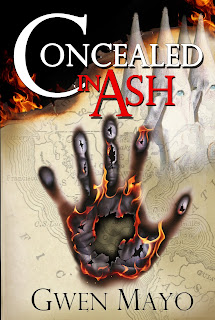
http://www.amazon.com/Concealed-Ash-Nessa-Donnelly-Mysteries-ebook/dp/B015M8IJIE/

Concealed in Ash is competing for Best Mystery Novel in the 2015 Preditors & Editors™ Readers' Poll.

Please visit the poll to see the list of novels and authors. Right now, I'm tied for 10th place; I would be very grateful to have your vote.

http://critters.org/predpoll/novelmys.shtml